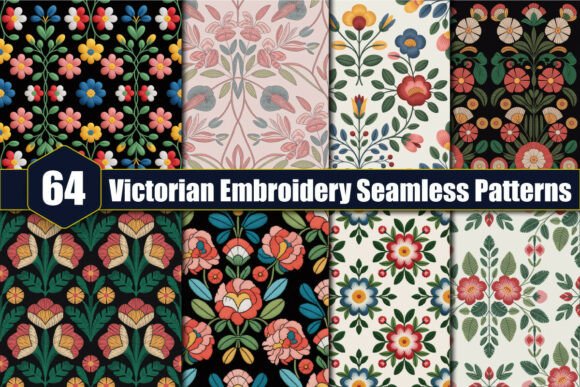
Victorian Embroidery Seamless Patterns
There is a distinct allure to the Victorian era’s aesthetic—a blend of intricate detail, romantic nostalgia, and structured elegance. For modern creators, this style offers a rich visual language that can elevate everything from digital web design to physical print materials. However, navigating the market for Victorian Embroidery Seamless Patterns requires more than just an appreciation for vintage beauty; it demands an understanding of technical specifications, licensing nuances, and the practical realities of digital asset usage. Whether you are a seasoned graphic designer or a hobbyist scrapbooker, making informed choices about your digital resources can save time, money, and frustration.
The core appeal of these patterns lies in their versatility. A seamless pattern allows for infinite tiling without visible seams, creating a continuous background or texture. This feature is indispensable for wrapping paper, wallpaper, fabric printing, and website backgrounds. When you acquire a high-quality set, you are not just buying an image; you are purchasing a scalable tool that can adapt to various project scales. The specific assets described here—delivered in JPG format at 300 DPI and sized at 12″ x 12″ (3600 x 3600 px)—represent a sweet spot for many creative applications. They offer sufficient resolution for most print jobs while remaining manageable file sizes for digital use.
Understanding Digital Assets: Format and Resolution
One of the most common pitfalls for beginners is misunderstanding file formats and resolution requirements. While vector files (like SVG or EPS) are often praised for infinite scalability, they are not always the best choice for every project, particularly when dealing with complex textures like embroidery stitches. Raster images, such as the JPG files provided in this collection, capture the subtle gradients and color variations of thread work beautifully. However, this comes with a caveat regarding resolution.
300 DPI is the industry standard for high-quality print. At 3600 x 3600 pixels, these images provide ample data for large-format prints, such as posters or large-scale wallpaper installations. However, if you plan to use these patterns on a small business card or a social media avatar, the full resolution may be overkill and could slow down your workflow without adding perceptible quality. Conversely, if you attempt to enlarge these images beyond their original dimensions significantly, you will encounter pixelation. It is crucial to respect the native resolution of the asset. Resize only as needed, using software that preserves image integrity, rather than stretching the canvas arbitrarily.
The Reality of AI-Generated Design
In today’s digital landscape, the line between human-made and machine-generated art has blurred. Many affordable and accessible pattern packs are now created using Artificial Intelligence. It is important to approach these assets with realistic expectations. The description notes that these are AI generated designs, yet emphasizes that the image quality is very good. This transparency is key. AI excels at mimicking styles and generating complex, repetitive structures quickly, which explains the intricate lace-like details often found in Victorian embroidery.
However, users should be aware that AI generation can sometimes introduce subtle artifacts or inconsistencies upon close inspection. While the overall impression may be flawless, zooming in might reveal slight irregularities in stitch direction or floral symmetry that a human artist would have corrected. For background textures, wall coverings, or distant elements in a composition, these minor imperfections are rarely noticeable and do not detract from the final product. But if you are using the pattern as a central focal point where every stitch matters, you may want to inspect the tiles closely before committing to a large production run. The advice here is simple: test print a small section first. If the quality meets your standards for your specific use case, proceed with confidence.
Licensing and Usage Rights
A frequent source of confusion and potential legal trouble is the ambiguity surrounding digital downloads. The phrase "digital download only" is critical. It means you are purchasing a license to use the file, not the copyright itself. You cannot resell the raw image file as your own stock photography. However, the broad usage rights mentioned—invites, scrapbooking, craft projects, stationery, websites, blogs, wallpaper, card making, wrapping paper, hang tags, decorations, decoupage, and paper cards—offer immense flexibility.
This breadth of permission makes the asset highly valuable for small business owners and content creators. You can integrate these patterns into printable planners, create custom gift wrap for your boutique, or use them as background textures for your blog posts. The key is to add value through your own creativity. Transforming the raw pattern into a finished product, such as a greeting card with added typography or a website header with integrated navigation, is generally acceptable under standard commercial licenses. Always double-check the specific terms of service associated with the purchase, but rest assured that for personal crafts and small-scale commercial applications, these patterns are designed to be versatile tools.
Practical Application and Creative Integration
To get the most out of your Victorian Embroidery Seamless Patterns, consider how they interact with other design elements. Victorian aesthetics thrive on contrast and layering. Pairing the delicate, organic curves of the embroidery with bold, modern typography can create a striking juxtaposition that appeals to contemporary audiences. Similarly, using these patterns as a subtle background behind clean, minimalist text ensures readability while maintaining an elegant atmosphere.
- Scrapbooking and Paper Crafts: Use the 12″ x 12″ size as a base page or a decorative border element. The high resolution ensures that die-cuts and punches remain crisp.
- Digital Stationery: Incorporate the patterns into email signatures, newsletter headers, or digital invitation templates. The seamless nature allows for easy tiling across different screen widths.
- Physical Merchandise: For those selling handmade goods, these patterns are ideal for sublimation printing on mugs, tote bags, or pillows. Ensure your printer supports the JPG format and that your color profile matches your ink system for accurate reproduction.
Evaluating Quality Before Commitment
Before integrating any new asset into your workflow, take a moment to evaluate its suitability. Open the JPG file in your preferred editing software and check the edges of the tile. A true seamless pattern should connect perfectly horizontally and vertically. Look for any obvious cuts or mismatches in the floral motifs. Additionally, assess the color palette. Victorian embroidery often features muted tones, deep reds, forest greens, and creams. Ensure these colors align with your brand identity or project theme.
Furthermore, consider the file management aspect. Since this is a digital download, organize your files immediately. Create a dedicated folder for "Victorian Textures" or "Seamless Patterns" within your project directory. This prevents clutter and ensures you can easily locate assets for future projects. Label your files clearly, noting the resolution and format, so you don’t have to re-download or re-verify them later.
Ultimately, the value of Victorian Embroidery Seamless Patterns lies in their ability to bring a touch of timeless elegance to modern creations. By understanding the technical specifications, acknowledging the nature of AI-generated content, and respecting usage rights, you can leverage these assets effectively. Avoid the trap of assuming all digital images are equal; instead, focus on how the specific qualities of this high-resolution, seamlessly tiling JPG set can solve your design challenges. With careful selection and thoughtful application, these patterns can become a staple in your creative toolkit, enhancing both your professional output and personal projects.